The social media landscape has transformed dramatically with algorithms now deciding what content users see, creating an existential threat for startups relying on organic visibility. This “Algorithm Apocalypse” has made traditional marketing approaches nearly invisible, forcing startups to embrace user-generated content (UGC) marketing as their lifeline in an increasingly filtered digital environment.
Key Takeaways
- Algorithm changes have decimated organic reach, with Facebook’s visibility dropping below 2% and Instagram engagement falling 44% since 2019
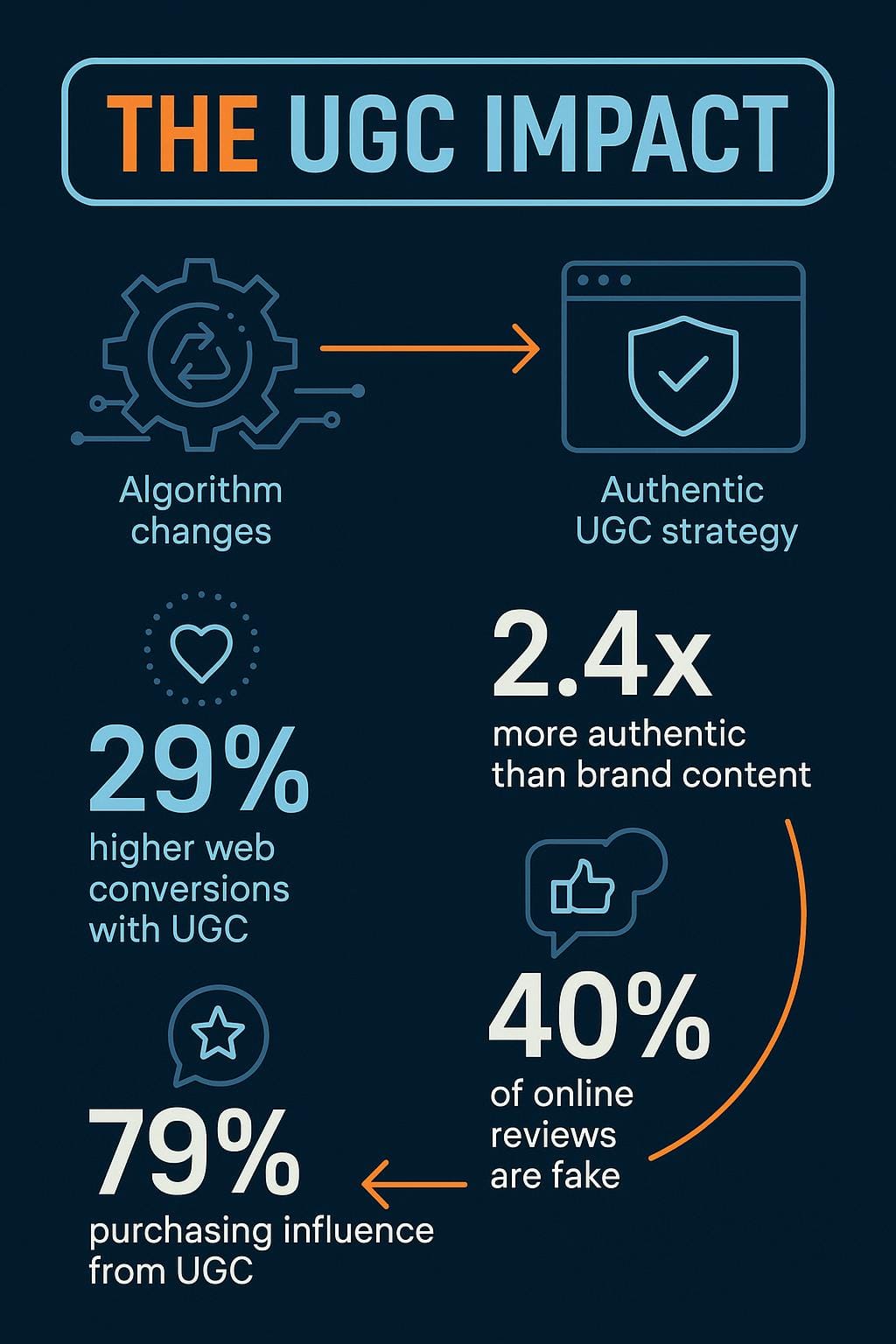
- UGC generates 29% higher web conversions than campaigns without it and consumers are 2.4x more likely to view it as authentic
- The rise of manufactured UGC threatens consumer trust, with an estimated 40% of online reviews being fake
- Community-based approaches that generate genuine advocacy perform better than transactional content relationships
- Effective measurement frameworks must track authentic engagement rather than vanity metrics to gauge true UGC success
The Algorithm Apocalypse: Why Traditional Marketing is Disappearing
Social media platforms have dramatically transformed how content reaches audiences, with algorithmic gatekeepers determining what users see. Meta platforms have reduced organic brand visibility by approximately 70% since 2020, creating an environment where unpaid content struggles to reach even existing followers.
For startups with limited marketing budgets, this algorithmic shift represents an existential threat. The days when simply posting quality content guaranteed reasonable reach have ended, replaced by a system that demands either significant ad spending or a completely different approach to digital marketing strategies.
UGC: The Algorithm-Resistant Marketing Approach
User-generated content has emerged as the most effective counter to algorithm limitations because platforms actively promote content that drives meaningful engagement. UGC videos receive 10 times more views on YouTube than brand-created content, while products featuring UGC photos experience a 69% higher conversion rate.
The numbers tell a compelling story for startups: 92% of consumers trust peer recommendations over traditional advertising, and brand engagement increases by an average of 28% when users see a mix of professional and user-generated content. This trust advantage explains why UGC-based emails achieve a 73% higher click-through rate than conventional marketing messages.
For startups navigating platform-specific challenges, the data reveals telling patterns. TikTok’s algorithm heavily favors authentic-seeming content, with UGC performing 22% better than brand content and receiving 8 times more engagement. Instagram Stories featuring UGC have double the completion rates of brand-created Stories, while YouTube testimonials from real users maintain viewer attention 50% longer than professionally produced alternatives.
The Authenticity Crisis: When Fake UGC Backfires
As marketers have recognized UGC’s power, an unfortunate trend has emerged: manufactured authenticity. An estimated 40% of online reviews are fake, creating a credibility gap that threatens the entire UGC ecosystem.
The rise of professional UGC creators who specialize in creating seemingly authentic content has further complicated matters. Federal Trade Commission violations related to undisclosed commercial relationships have increased 400% since 2020, reflecting both greater scrutiny and more widespread problems.
Consumers, particularly younger generations, have developed sophisticated detection systems for identifying paid content. About 61% of Gen Z reports being able to immediately identify paid UGC, and 70% of consumers claim they can differentiate between genuine recommendations and commercial placements. This growing skepticism means manufactured authenticity often achieves the opposite of its intended effect, damaging brand perception rather than enhancing it.

Building a Genuine UGC Strategy
Startups succeeding with UGC have moved beyond transactional approaches to develop community-centered strategies that generate natural advocacy. This shift requires viewing customers as potential content partners rather than passive consumers.
Effective UGC frameworks make content creation accessible for actual users while maintaining quality standards. Consider these practical implementation elements:
- Create clear guidelines that inspire rather than restrict creative expression
- Develop permission frameworks that respect creator rights while enabling content amplification
- Build attribution systems that properly credit creators and maintain transparency
- Establish value exchanges that offer meaningful benefits beyond financial compensation
The most successful startup UGC programs incorporate cross-platform strategies that diversify algorithmic risk. Employee content on LinkedIn generates 8 times more engagement than company page posts, making internal advocacy a powerful complement to customer-generated content.
Measuring Authentic Engagement
Traditional vanity metrics fail to capture UGC’s true impact on business results. Instead, startups should focus on indicators that reflect genuine engagement and downstream conversion impacts.
Effective measurement frameworks track metrics like:
- Content reuse rate – how often UGC is shared by other customers
- Conversion lift from UGC-influenced customer journeys
- Community growth rates tied to UGC initiatives
- Sentiment analysis comparing brand-created to user-created content
The most valuable UGC metrics connect directly to business outcomes rather than platform-specific engagement metrics. For startups with limited resources, focusing on conversion-oriented UGC delivers more immediate value than content designed purely for awareness.
Conclusion: UGC as a Strategic Advantage
The algorithm apocalypse has permanently altered the digital marketing landscape, making user-generated content not just a tactic but a strategic necessity for startups. By developing genuine community connections that naturally generate authentic content, startups can bypass algorithmic limitations while building brand authenticity that resonates with increasingly skeptical audiences.
The future belongs to brands that facilitate rather than fabricate user expression. For startups looking to maximize impact with minimal resources, genuine UGC offers the rare combination of lower costs and higher effectiveness compared to traditional approaches – provided they prioritize authentic engagement over manufactured impressions.