September marks the harsh transition from summer’s relaxed pace to the high-stakes sprint toward year-end goals and performance metrics. The post-summer scramble isn’t just about catching up on emails – it’s about strategically repositioning yourself for career advancement while the final quarter of the year still offers significant opportunity for impact.
Key Takeaways
- 78% of professionals experience a significant productivity drop during summer months
- Conducting a shame-free work audit helps identify priorities without self-sabotage
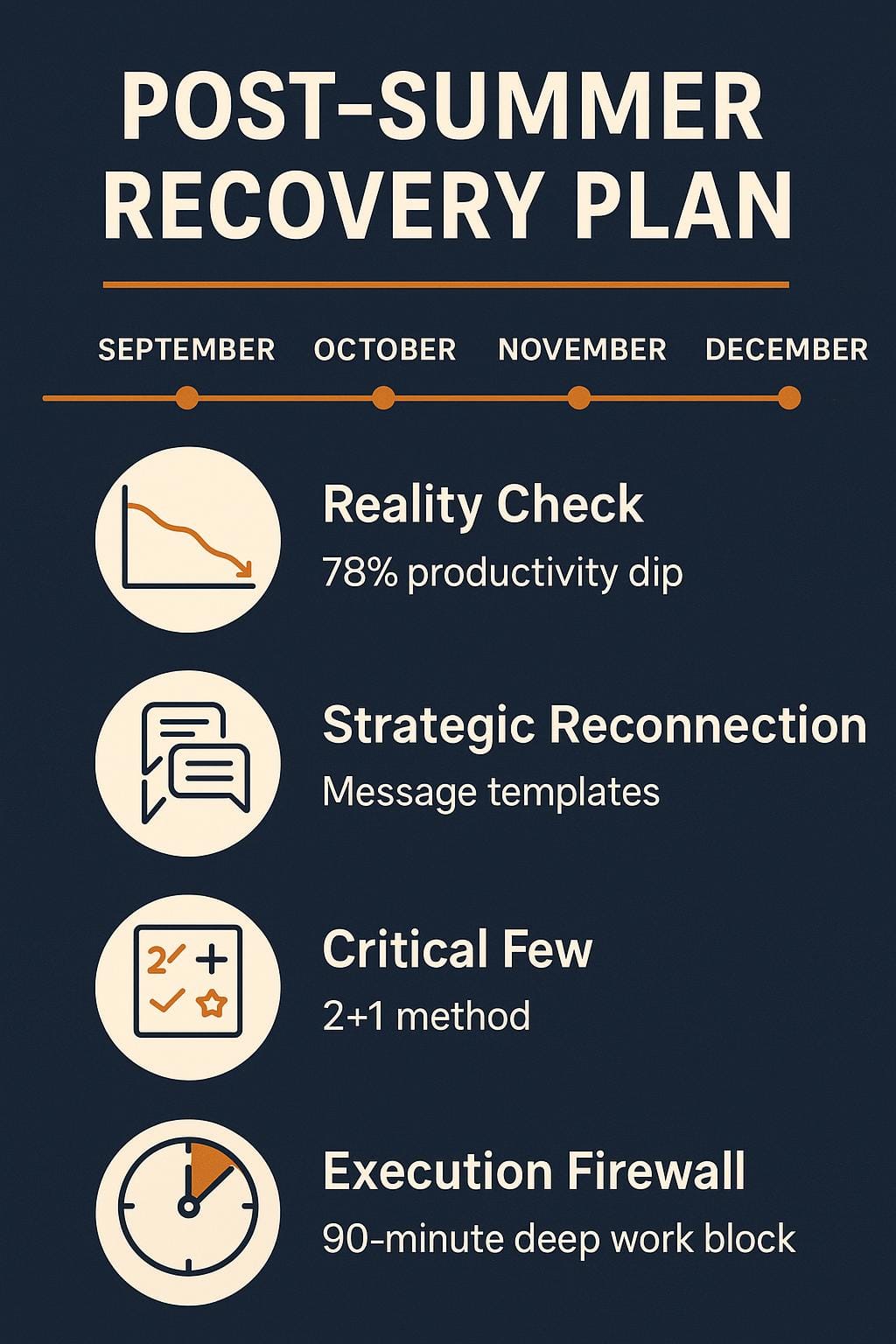
- The 2+1 method focuses your energy on two professional goals and one development goal for maximum Q4 impact
- Strategic relationship recovery requires prioritizing which professional connections need immediate attention
- Creating productivity boundaries around your comeback plan prevents falling back into summer patterns
The Reality Check: What Really Happened This Summer
Let’s be honest about what actually happened to your career goals this summer. Projects got pushed, emails lingered unanswered, and that networking event you planned to attend somehow never made it onto your calendar.
Research shows that 78% of professionals report a significant dip in productivity during summer months. This isn’t unusual – it’s a predictable pattern that happens to almost everyone.
The key is conducting a shame-free audit of where things stand. I recommend taking 15 minutes for a career snapshot assessment that focuses on identifying patterns rather than self-criticism.
List all delayed projects, postponed decisions, and neglected professional relationships. Note which ones make you feel most anxious – these typically indicate high-value opportunities that your subconscious knows are important.
The Strategic Reconnection Plan
The post-summer period demands a methodical approach to getting back on track with your professional relationships. Not all connections require the same level of immediate attention – prioritize based on potential impact on your Q4 goals.
For long-dormant contacts, a brief message acknowledging the gap works better than pretending no time has passed: “It’s been a while since we connected after the June conference. I’ve been thinking about our conversation on [specific topic] and would love to pick that back up.”
For active collaborators who may have noticed your summer slowdown, try the 48-hour project revival method. This involves sending a concise status update with one specific action item and a clear timeline – this creates immediate momentum.
A marketing director I worked with used this technique to recover from a three-month project delay in just ten days. She prioritized quick-win deliverables that demonstrated renewed commitment, rebuilding trust before tackling the more complex components.
The psychology of momentum matters here – small wins create compound effects. Start with simple reconnection points before attempting to solve complex problems that built up over summer.
The Critical Few: Identifying Your Q4 Game-Changers
The fatal mistake in post-summer planning is trying to accomplish everything at once. Instead, use the 2+1 method to identify two critical professional goals and one developmental goal for Q4.
When selecting your critical few objectives, apply these criteria:
- Which outcomes will have the most significant impact on year-end evaluations?
- Which projects have high visibility with decision-makers?
- Which goals align with long-term professional development plans?
- What can realistically be accomplished in the remaining timeframe?
Once you’ve identified these priorities, implement time-blocking specifically designed for the September-December period. Allocate 60-90 minutes of deep work daily toward these objectives before opening email or attending meetings.
Watch for warning signs that you’re falling back into diffused focus: constantly checking email, saying yes to non-essential meetings, or working on low-impact tasks that feel productive but don’t move the needle on priority outcomes.

The Execution Firewall: Protecting Your Comeback Plan
Your renewed focus needs protection from the inevitable distractions that will emerge. Creating boundaries around your priority work isn’t selfish – it’s essential for delivering on commitments that matter to your career goals.
Implement a digital detox protocol that reclaims at least 90 minutes of focused work daily. This might mean setting your status to “do not disturb,” working from a conference room, or using productivity apps that block distracting websites.
The strategic use of “no” becomes crucial during this end of summer transition period. A template I’ve found effective is: “That sounds interesting, but I’m currently focused on delivering [specific priority project] before the end of Q4. Could we revisit this in January?”
Setting up accountability systems doesn’t need to be complicated. Find a work motivation partner who shares similar Q4 goals and schedule weekly 15-minute check-ins focused specifically on priority projects.
When communicating your renewed focus to stakeholders, frame it in terms of benefits to them: “To ensure I deliver excellent results on [their priority], I’m blocking Tuesday and Thursday mornings for focused work on this project.” This approach emphasizes your commitment to quality rather than unavailability.
Turning the Final Quarter Into Your Strongest
The post-summer scramble can actually become a strategic advantage with the right business strategy. By conducting an honest assessment, prioritizing key relationships, focusing on high-impact goals, and protecting your execution plan, you position yourself for exceptional performance when many others are still shaking off summer mode.
Remember that in many industries, Q4 represents 30-40% of annual performance outcomes. This creates a significant opportunity for career advancement if you can execute effectively during this critical period.
The ability to transition smoothly from summer mode to high-productivity Q4 performance isn’t just about current deliverables – it’s a valuable productivity tip that managers notice and reward. Master this transition, and you’ll distinguish yourself as someone who delivers when it matters most.
Sources
Harvard Business Review: How to Get Back Into a Work Routine After a Vacation
Forbes: 12 Ways to Stay Productive During the End of Summer Slump
Fast Company: How to Transition Back to Work After a Vacation
The Muse: Back to Work After Vacation Tips
Wall Street Journal: The Best Ways to Get Back to Work After a Vacation