The holiday season often magnifies the pain of loss, creating a complex emotional landscape where joy and grief intertwine unexpectedly. For those facing their first or even twentieth Christmas without a beloved family member, the contrast between festive celebrations and personal heartache can transform traditional moments of cheer into painful reminders of absence.
Key Takeaways
- Holiday grief intensifies due to the stark contrast between festive celebrations and personal loss
- Creating intentional remembrance rituals can provide comfort while acknowledging your loved one’s continuing presence
- Setting clear boundaries with family and friends about your needs is essential for emotional well-being
- Finding balance between honoring grief and allowing moments of joy is possible with gentle self-compassion
- New traditions can honor the past while creating space for healing and growth in your grief journey
This post contains affiliate links. As an Amazon Associate, I earn from qualifying purchases at no extra cost to you. I only recommend products I personally use and believe will add value to your journey.
Understanding Holiday Grief: Why Christmas Can Be So Difficult After Loss
The psychological impact of holiday grief runs deeper than many realize. Research from Yale School of Medicine confirms what many of us experience intuitively – grief intensifies during holidays because of the sharp contrast between celebrations and our personal loss.
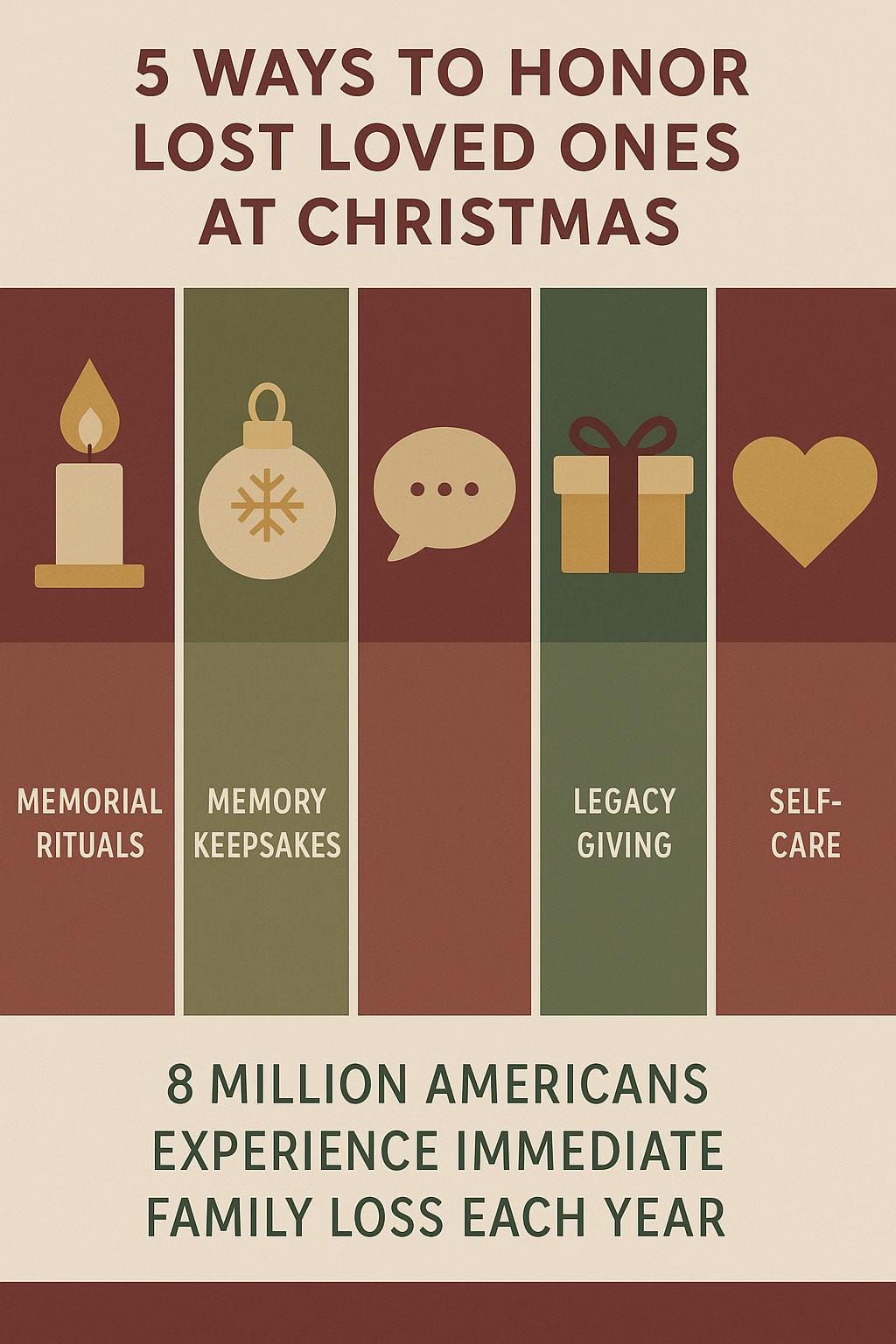
This painful reality affects millions of Americans each year. According to Census Bureau data, approximately 8 million Americans experience the death of an immediate family member annually, with many facing their first holiday season without that person.
📦 Gentle Support for Holiday Grief
- 🔗 How to Carry What Can’t Be Fixed – compassionate grief workbook
- 🔗 Willow Tree Remembrance Angel – beautiful memorial keepsake
- 🔗 Weighted blanket for comforting physical support
As an Amazon Associate, I earn from qualifying purchases.
The “empty chair” phenomenon describes how familiar traditions highlight absence rather than bringing comfort. That vacant seat at the dinner table becomes a painful visual reminder of who’s missing, making joyful gatherings bittersweet at best and unbearable at worst.
Grief researchers Stroebe and Schut describe the Dual Process Model of grief, which helps explain why holidays disrupt our natural coping mechanisms. Normally, we oscillate between loss-oriented activities (focusing on the grief) and restoration-oriented activities (engaging with life). Holiday celebrations forcefully disrupt this delicate balance.
Common emotional responses during the holidays include guilt about experiencing moments of joy, anxiety about meeting others’ expectations, and confusion about how to celebrate. I’ve experienced that uncomfortable sensation of laughing at a holiday gathering, only to be hit with a wave of guilt for feeling happy when someone important is missing.
Understanding these psychological patterns can help validate your experience if you’re coping with loss during holidays. Your grief isn’t wrong or excessive – it’s a natural response to the heightened emotions and expectations of the season.
Creating Meaningful Remembrance Rituals
Intentional remembrance activities provide therapeutic value during the holidays. Grief counselors from organizations like the Hospice Foundation of America emphasize that acknowledging your loved one’s continued presence in your life can bring comfort and healing, even amid pain.
A memorial candle lighting ceremony creates a simple yet profound ritual. Choose a special candle – perhaps in their favorite color or scent – and designate a specific time to light it during gatherings. You might invite others to share a brief memory as the candle burns, creating space for collective remembrance.
Related Guides: Check out our related articles for more helpful tips and insights.
Memory ornaments or decorations incorporate your loved one into holiday traditions. I’ve found comfort in creating ornaments using photos, handwritten notes, or items that symbolize special memories. These tangible reminders help keep their spirit present during the holidays.
📦 Memorial Keepsakes for Christmas
- 🔗 Photo frame ornaments for preserving cherished memories
- 🔗 Battery-operated memorial candles with timers for safe remembrance
- 🔗 Custom memory bear made from loved one’s clothing
As an Amazon Associate, I earn from qualifying purchases.
Reserved place settings create powerful acknowledgment of absence while honoring continuing bonds. Setting a place with a special plate, placing a photo at their usual seat, or lighting a candle at their place acknowledges the reality of loss while honoring their memory.
Legacy gifts transform grief into meaningful action. Making donations or volunteering for causes important to your loved one creates a positive impact in their name. After my grandmother passed away, I began volunteering at her favorite literacy program, which gives me a sense of continuing her values during the holiday season.
Sensory connections provide powerful comfort while remembering deceased family members. Playing their favorite Christmas songs, cooking their signature dishes, or using their special holiday decorations engages multiple senses in remembrance.
Setting Boundaries and Communicating Needs
Clear communication reduces anxiety and prevents misunderstandings during the holidays. Grief counselors emphasize that expressing your needs isn’t selfish – it’s essential self-care during a vulnerable time and helps others understand how to support you effectively.
Preparing script templates for difficult conversations can help when emotions run high. Practice phrases like: “I’d love to join for dessert but need to skip dinner this year” or “Could we modify the gift exchange to be briefer this year? I’m finding it overwhelming.”
📦 What I Personally Use for Emotional Support
- 🔗 Guided grief journal with prompts for processing emotions
- 🔗 Aromatherapy diffuser with calming essential oils
- 🔗 Noise-cancelling headphones for moments of overwhelm
As an Amazon Associate, I earn from qualifying purchases.
The COPE method provides a structured approach to holiday planning when you’re experiencing grief support: Choose what matters most to you, Opt out of draining activities, Plan ahead for emotional triggers, and Express your needs clearly to others.
Creating a holiday grief plan with personal boundaries helps maintain control during unpredictable emotions. I recommend writing down specific limits (like departure times from gatherings) and sharing this plan with trusted supporters who can help you implement your boundaries.

Digital communication strategies can reduce emotional labor during grief. Using group messages to explain your needs once, rather than repeating difficult conversations, preserves your limited emotional energy. Designating a family coordinator to communicate your preferences can also provide valuable buffer.
Finding Balance: New Traditions and Gentle Self-Care
The psychological concept of “both/and thinking” applies powerfully to Christmas without loved ones. You can honor grief while allowing moments of joy – these emotions can coexist without diminishing either experience.
Research from the University of Pennsylvania reveals that anticipatory anxiety often causes more distress than the events themselves. This means the weeks leading up to Christmas might be more difficult than the actual day, which is helpful to remember when anxiety builds about upcoming celebrations.
Related Guides: Check out our related articles for more helpful tips and insights.
A practical self-care toolkit provides immediate relief during overwhelming moments. Simple grounding exercises (like the 5-4-3-2-1 technique identifying things you can see, touch, hear, smell, and taste) can help anchor you during emotional flooding.
📚 Recommended Reading
- 📖 It’s OK That You’re Not OK by Megan Devine – Compassionate guidance for grief
- 📖 Bearing the Unbearable by Joanne Cacciatore – Wisdom for grief’s darkest moments
As an Amazon Associate, I earn from qualifying purchases.
Creating new traditions acknowledges the transition rather than attempting to replicate the past. After experiencing loss, I found it healing to establish completely new Christmas activities rather than trying to recreate exactly what we’d done before – this honors the reality that things have fundamentally changed.
Dr. Tedeschi’s research on post-traumatic growth offers hope that grief can eventually transform us. While this growth doesn’t erase the pain, many grieving people eventually discover deeper appreciation for life, stronger relationships, and spiritual development through their grief journey.
🛠️ My Complete Holiday Grief Toolkit
Here’s everything I personally use and recommend:
Essential
Nice to Have
As an Amazon Associate, I earn from qualifying purchases.
Finding meaning through helping others provides purpose during difficult times. Community service opportunities specifically designed for those experiencing holiday grief can create connection while channeling emotions into positive action.
Professional support remains important during the holiday season. Connecting with grief counselors, support groups, or therapists provides specialized guidance when needed. The holidays often trigger deeper grief responses, making this an appropriate time to seek additional help.
Sources
Yale School of Medicine – Research on grief intensification during holidays
U.S. Census Bureau – Statistics on Americans experiencing family member deaths annually
Stroebe & Schut – Dual Process Model of grief
Hospice Foundation of America – Therapeutic value of remembrance rituals
University of Pennsylvania – Studies on anticipatory anxiety vs. actual experience
Dr. Tedeschi – Research on post-traumatic growth through grief