The modern beauty landscape presents a profound dilemma between embracing anti-aging interventions and celebrating natural aging processes. As the global anti-aging market surges toward $93.1 billion by 2027, individuals increasingly face complex decisions about authenticity, identity, and the pursuit of beauty ideals in a society obsessed with youth.
Key Takeaways
- The anti-aging industry is projected to reach $93.1 billion by 2027, reflecting society’s complex relationship with aging
- Studies show a tangible “beauty premium” where attractive individuals earn 10-15% more on average
- Regular exposure to filtered social media content increases appearance dissatisfaction by 32%
- Natural alternatives like retinol and vitamin C offer evidence-based benefits without invasive procedures
- The emerging “pro-aging” movement focuses on skin health rather than fighting natural changes
This post contains affiliate links. As an Amazon Associate, I earn from qualifying purchases at no extra cost to you. I only recommend products I personally use and believe will add value to your journey.
The Beauty Paradox: Understanding Anti-Aging Treatments vs. Natural Aging
The journey through aging has never been more complicated than in today’s beauty-conscious world. We’re simultaneously bombarded with messages celebrating authenticity and advertisements promising to erase every sign of aging from our faces.
This contradiction creates a genuine dilemma for many people. Do we embrace the natural aging process with its wisdom lines and character, or do we utilize the ever-expanding array of interventions designed to maintain youthful appearances?
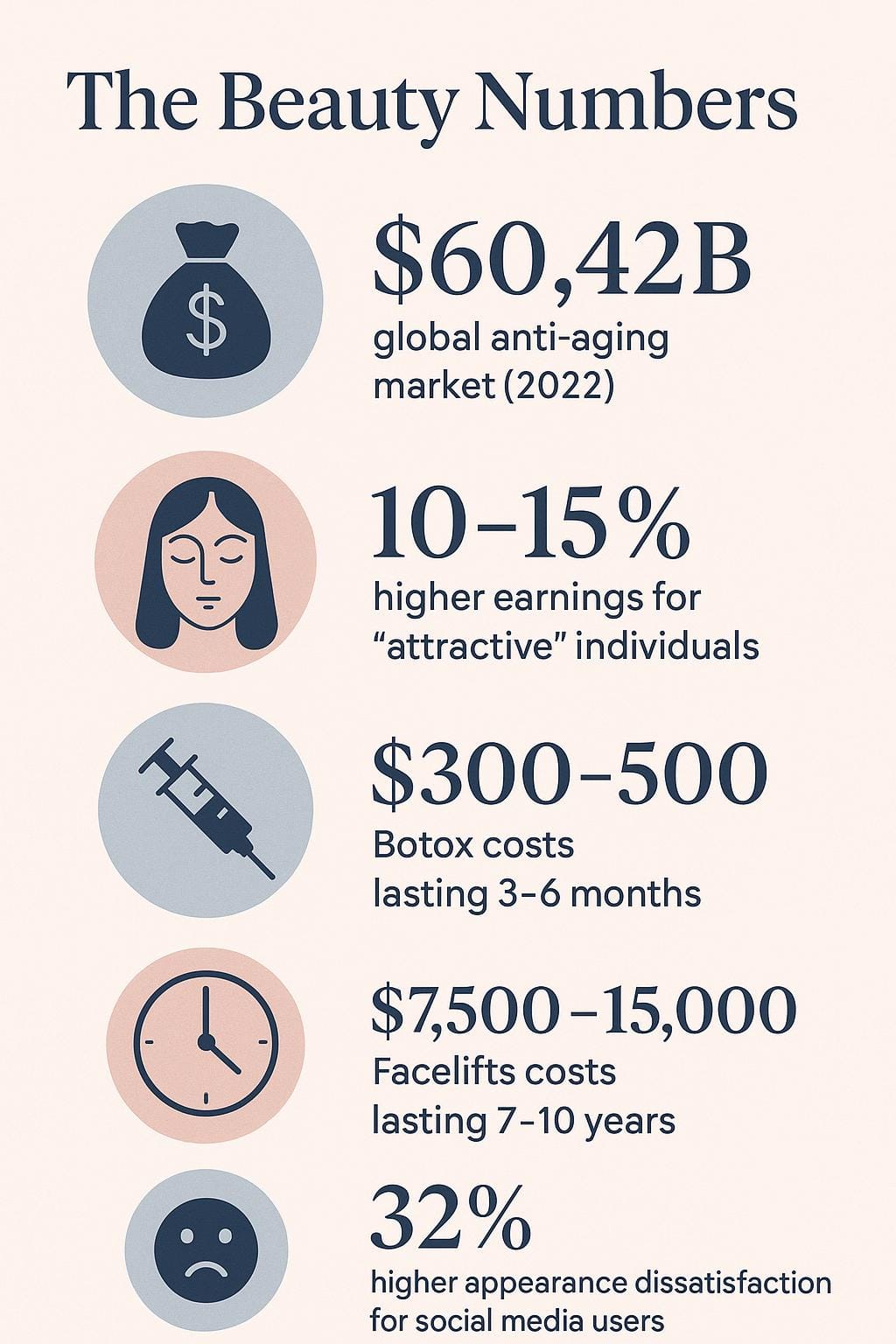
The statistics reveal our collective preoccupation with this question. The global anti-aging market was valued at approximately $60.42 billion in 2022 and is projected to reach an astonishing $93.1 billion by 2027. These numbers reflect not just economic activity but deeper societal questions about beauty, aging, and personal identity.
What makes this conversation particularly difficult is that there are valid perspectives on both sides. Those who pursue anti-aging treatments often report improved confidence and social opportunities, while natural aging advocates emphasize authenticity and the beauty of embracing life’s natural progression.
📦 Essential Skincare for Any Approach
- 🔗 CeraVe Retinol Serum – gentle cell renewal without irritation
- 🔗 EltaMD UV Clear Sunscreen – dermatologist-recommended protection
- 🔗 The Ordinary Niacinamide Serum – affordable skin barrier support
As an Amazon Associate, I earn from qualifying purchases.
The Psychology Behind Our Beauty Choices
Our decisions about aging and beauty run far deeper than surface-level vanity. They’re intricately connected to how we perceive ourselves and how others perceive us in professional and social environments.
Research has consistently demonstrated what psychologists call the “beauty premium” – a phenomenon where attractive individuals earn 10-15% more on average than their counterparts. This creates tangible economic incentives that can influence our beauty decisions, sometimes unconsciously.
The psychological concept of “appearance anxiety” has gained significant recognition, particularly affecting individuals in the 30-55 age demographic. This anxiety emerges as we begin to notice the first significant signs of aging, often triggering complex emotions about identity and self-worth.
For approximately 2% of the population, these concerns escalate to body dysmorphic disorder – a clinical condition characterized by obsessive focus on perceived flaws in appearance. This highlights how beauty concerns exist on a spectrum from normal awareness to potentially debilitating conditions.
Our beauty choices are also shaped by cultural messaging. Consider these influential factors:
- Family attitudes toward aging and appearance
- Cultural and ethnic beauty standards
- Media representation of aging
- Professional environment expectations
- Personal relationships and feedback
Related Guides: Check out our related articles for more helpful tips and insights.
Understanding the psychological aspects of our beauty choices can help us make decisions that authentically align with our values rather than simply responding to external pressures. I’ve found that focusing on overall happiness often leads to more satisfying beauty decisions than pursuing specific appearance ideals.
Navigating Options: From Botox to Bakuchiol
When considering approaches to aging, it’s helpful to understand the full spectrum of options available, from medical interventions to natural alternatives. Each comes with its own considerations of cost, effectiveness, and alignment with personal values.
Medical interventions have evolved significantly and now offer various levels of invasiveness. Botox injections, costing between $300-500 per area and lasting 3-6 months, temporarily reduce the appearance of dynamic wrinkles by limiting muscle movement.
For those seeking more dramatic results, surgical options like facelifts ($7,500-15,000) offer more permanent solutions lasting 7-10 years, while eyelid surgery ($4,000-6,000) specifically targets age-related changes around the eyes. These higher-investment procedures typically deliver more significant and longer-lasting results.
📚 Recommended Reading
- 📖 The Beauty Myth by Naomi Wolf – Classic examination of beauty standards
- 📖 Beyond Beautiful by Anuschka Rees – Practical guide to body image
As an Amazon Associate, I earn from qualifying purchases.
The natural beauty approach emphasizes less invasive options that work with your body’s processes. Collagen-stimulating skincare containing retinol ($15-250) enhances cell turnover while high-quality vitamin C serums provide antioxidant protection against environmental damage.
Emerging alternatives like bakuchiol offer retinol-like benefits without irritation, making them suitable for sensitive skin types. After researching numerous options, I’ve found that plant-based boosters often provide similar benefits with fewer side effects than traditional treatments.
The natural approach typically extends beyond products to encompass lifestyle factors with proven impact on skin aging:
- Nutrition rich in antioxidants and anti-inflammatory compounds
- Quality sleep allowing optimal cellular repair
- Stress management to reduce cortisol-related collagen breakdown
- Consistent sun protection preventing 80-90% of visible skin aging
📦 Natural Anti-Aging Alternatives
- 🔗 BYBI Bakuchiol Booster – plant-based retinol alternative
- 🔗 NuFACE Mini Facial Toning Device – non-invasive muscle stimulation
- 🔗 Slip Silk Pillowcase – reduces friction and sleep creasing
As an Amazon Associate, I earn from qualifying purchases.
Finding Your Path: Personal Values and Societal Pressures
The decision between anti-aging interventions and natural beauty approaches is becoming increasingly complicated by digital influences. Social media has dramatically altered our perception of normal aging, with research showing that regular exposure to filtered content correlates with a 32% higher rate of appearance dissatisfaction.
This digital influence intensified during the pandemic with what plastic surgeons termed the “Zoom Boom” – a 70% increase in consultation requests as people became more aware of their appearance during video conferences. I’ve noticed that modern life’s demands often exacerbate our appearance concerns, creating a cycle that’s difficult to break.
Counter to these pressures, a growing “pro-aging” movement is challenging traditional beauty narratives. This philosophy makes an important distinction between “anti-aging” (attempting to reverse natural processes) and “pro-aging” (supporting skin health while accepting natural changes).
The fashion industry is also slowly evolving, with recent fashion trends beginning to showcase more age diversity and natural beauty approaches alongside traditional youthful ideals.
When making personal decisions about aging, consider these guiding questions:
- What specifically bothers me about aging, and why?
- Am I responding to internal desires or external expectations?
- How would I feel if my intervention choices became publicly known?
- What approach aligns with my deeper values about authenticity and self-expression?
- What reasonable expectations can I have about results and maintenance?
Related Guides: Check out our related articles for more helpful tips and insights.
| Approach | Best For | Key Benefit | Price Range | Shop Options |
|---|---|---|---|---|
| Retinoid Products | Texture & Fine Lines | Cell Turnover | $15-250 | View Options |
| Microcurrent Devices | Facial Toning | Muscle Stimulation | $200-500 | View Options |
| Botox | Dynamic Wrinkles | Muscle Relaxation | $300-500/area | View Alternatives |
As an Amazon Associate, I earn from qualifying purchases.
Conclusion
The conversation about anti-aging treatments versus natural beauty approaches isn’t about finding a universal right answer, but rather identifying what feels authentic to each individual. The most successful approach appears to be highly personalized, aligning with personal values, psychological wellbeing, and a realistic understanding of available options.
Whether choosing medical interventions, natural alternatives, or some combination, the key is making informed decisions that come from internal values rather than external pressures. True beauty confidence often emerges when we feel our choices reflect our authentic selves, whatever path that might take.
🛠️ My Complete Skincare Toolkit
Here’s everything I personally use and recommend:
Daily Essentials
Treatment Products
As an Amazon Associate, I earn from qualifying purchases.
Sources
Grand View Research: Anti-Aging Market Analysis
NCBI: Psychological Aspects of Aging and Beauty
American Society of Plastic Surgeons: COVID-19 Industry Trends
PubMed: Social Media’s Impact on Body Image
American Psychological Association: Appearance Anxiety