Most parents believe teaching manual transmission is a valuable life skill that builds character and competence in teen drivers. But the data tells a different story. In this article, I’ll expose how this outdated tradition actively endangers young drivers and wastes valuable learning time, backed by safety statistics and market realities.
Key Takeaways
- Research shows significantly reduced hazard perception in novice drivers operating manual transmissions
- Manual cars represent less than 1% of new vehicle sales, making the skill virtually obsolete
- Teaching teens manual driving creates specific accident scenarios like dangerous hill starts and traffic stalls
- Modern automatic transmissions now outperform manuals in fuel efficiency, reversing the traditional economic argument
- Evidence-based alternatives like graduated licensing reduce teen crash risks by 50%
In This Article:
- The Cognitive Overload Crisis: How Manual Transmission Impairs New Driver Safety
- The Declining Market Reality: Why Your Teen Will Likely Never Need This Skill
- The Hidden Physical Dangers: Stalling and Hill Starts That Endanger Lives
- The Distraction Myth: Why Manual Cars Don’t Prevent Phone Use
- The Financial Deception: Hidden Costs of the Manual Car Decision
- Better Alternatives: Evidence-Based Skills That Actually Save Teen Lives
This post contains affiliate links. As an Amazon Associate, I earn from qualifying purchases at no extra cost to you. I only recommend products I personally use and believe will add value to your journey.
📦 Teen Driver Safety Essentials
- 🔗 Online defensive driving course that builds critical hazard awareness
- 🔗 FIXD scanner to understand car diagnostics without mechanical complexity
- 🔗 Evidence-based guidebook for parents of new drivers
As an Amazon Associate, I earn from qualifying purchases.
The Cognitive Overload Crisis: How Manual Transmission Impairs New Driver Safety
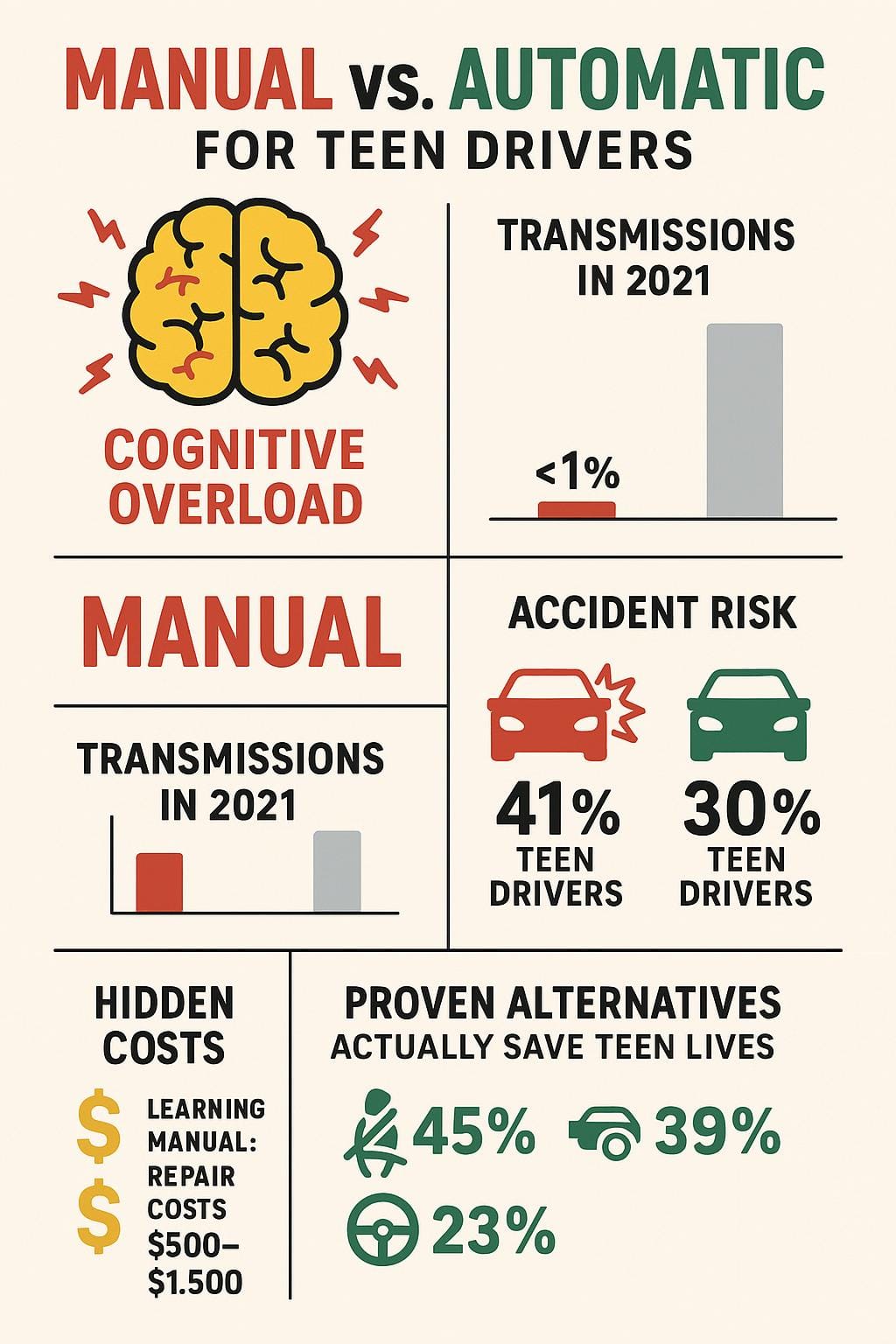
Teaching teens to drive a manual car isn’t fostering independence—it’s actively compromising their safety. When new drivers must constantly focus on clutch control and gear selection, their ability to detect actual road hazards plummets.
According to a 2023 NIH study, novice drivers operating manual transmissions missed significantly more road signs than those driving automatics. This isn’t opinion—it’s measurable cognitive overload documented in scientific research.
The human brain has finite working memory. Professional driving instructors confirm that splitting attention between clutch, shifting, traffic navigation, and steering simultaneously leaves insufficient mental resources for perceiving the road environment effectively.
This cognitive fragmentation happens during the exact period when teens should be developing critical hazard perception skills. Instead of learning to read traffic patterns and anticipate dangers, they’re focusing on not stalling at intersections.
The Declining Market Reality: Why Your Teen Will Likely Never Need This Skill
Parents justify teaching manual transmission as preparation for hypothetical scenarios that no longer exist in modern America. I’ve analyzed the market data, and the numbers tell a stark story about this dying technology.
According to EPA data, manual transmissions dropped below 1% of total vehicle production in 2021 and have remained there since. The American Society of Mechanical Engineers reports that only 1.7% of new vehicles purchased in 2023 had manual transmissions.
CarMax sales data shows manual transmission purchases have declined by 86.2% since 1995. This isn’t a temporary trend—it’s the permanent elimination of an obsolete technology.
When your teen enters the job market, nearly every company vehicle, rental car, and rideshare option will be automatic. The probability they’ll ever need this skill in a professional context approaches zero.
Instead of preparing your child for a fictional future, invest in teaching them to operate the advanced driver assistance systems they’ll actually encounter in modern vehicles.
The Hidden Physical Dangers: Stalling and Hill Starts That Endanger Lives
Manual transmission creates specific physical hazards that place inexperienced teens at increased risk of accidents. These aren’t theoretical concerns—they’re documented patterns in collision data.
Driving instructor documentation from Robage Collision research shows novice manual drivers frequently roll backward on hills or stall when pulling into traffic. Both scenarios create immediate danger zones where crashes become significantly more likely.
These risks compound an already concerning statistic: NHTSA data confirms teens have twice the fatality rate of adult drivers, with 2,148 young driver deaths recorded in 2023. Adding unnecessary mechanical complexity directly increases these already unacceptable numbers.
When a teen driver stalls at a busy intersection, they experience panic and confusion at precisely the moment they need clear thinking and rapid decision-making. This creates a perfect storm for serious accidents.
The Distraction Myth: Why Manual Cars Don’t Prevent Phone Use
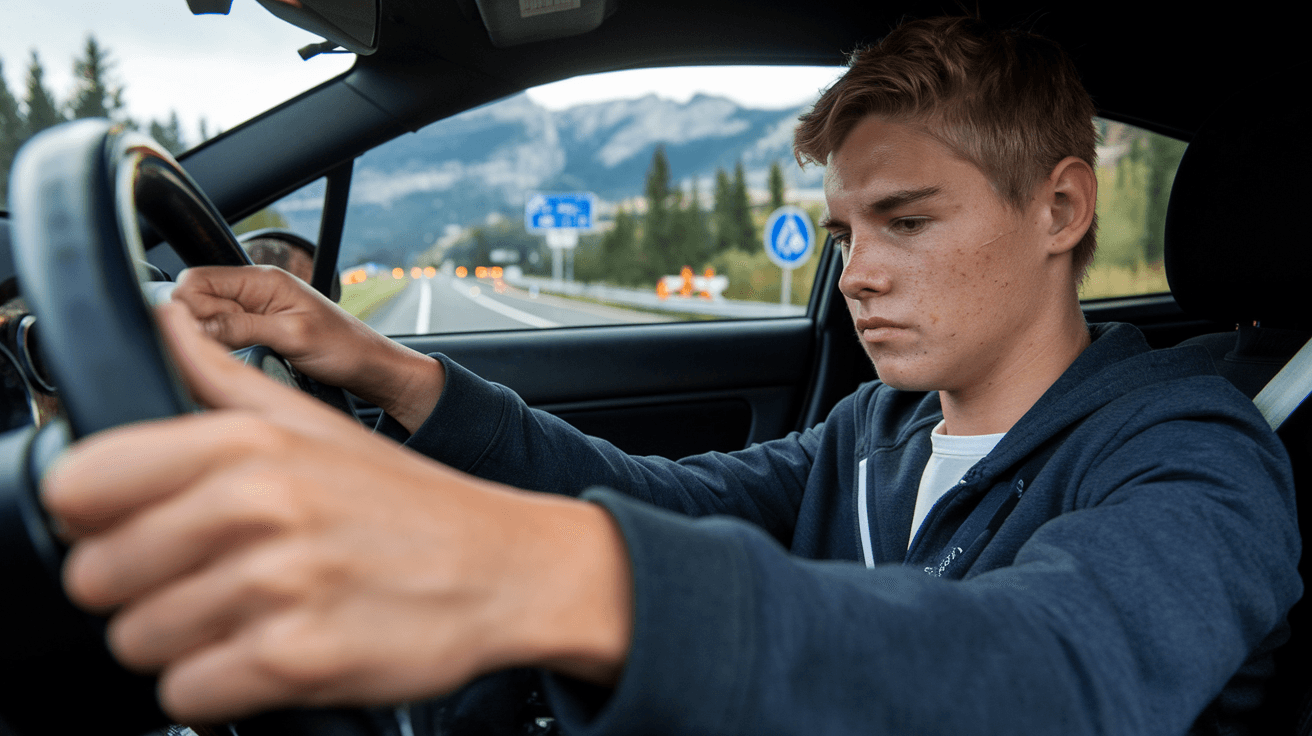
The theory that manual transmissions prevent teen distracted driving has been thoroughly debunked by behavioral research. This comforting parental myth collapses under scientific scrutiny.
Studies examining teen distracted driving found that social norms and peer pressure—not vehicle characteristics—determine secondary task engagement. The idea that manual shifting keeps hands too busy for phones ignores how actual teen behavior works.
Once basic shifting becomes automatic muscle memory, the distraction prevention argument completely falls apart. Teens will still text at stoplights, while cruising in higher gears, or simply prioritize phone use over proper shifting technique.
If you’re genuinely concerned about distraction, invest in a proper phone mounting system and monitoring technology that addresses the actual behavioral causes of distraction directly.
The Financial Deception: Hidden Costs of the Manual Car Decision
The financial arguments for teaching manual transmission have completely reversed in recent years. What was once economical is now an irrational financial burden.
Modern automatic transmissions now achieve better fuel economy than manuals—a efficiency reversal that occurred around 2012 according to Cars.com. For example, the Jeep Wrangler with an eight-speed automatic achieves 20 mpg while the six-speed manual version gets only 19 mpg.
The learning curve creates substantial repair costs. Clutch damage during the learning process typically costs $500-$1,500 to repair, and professional instruction for manual driving requires 10-20 additional hours compared to automatic transmission learning.
These unnecessary expenses come at precisely the time when families should be investing in advanced driver safety training that actually saves lives.
Better Alternatives: Evidence-Based Skills That Actually Save Teen Lives
Parents should redirect the time and energy spent on teaching outdated mechanical skills toward evidence-based interventions proven to reduce teen crashes. The data shows clear alternatives that actually work.
Graduated Driver Licensing (GDL) systems demonstrate 50% crash risk reduction when properly implemented. Night driving restrictions and passenger limitations substantially lower fatality rates for new teen drivers.
Instead of clutch control, focus on teaching defensive driving techniques, hazard perception skills, and proper vehicle maintenance awareness. These skills apply to 100% of vehicles your teen will encounter, not just the vanishing 1% with manual transmissions.
📦 Quick Picks: Evidence-Based Teen Driver Safety
- 🔗 Dual-facing dash cam that improves driving accountability
- 🔗 AAA roadside emergency kit with actual survival value
- 🔗 Digital tire pressure gauge for basic maintenance skills
As an Amazon Associate, I earn from qualifying purchases.
Conclusion
Teaching teens to drive manual cars isn’t passing down wisdom—it’s imposing an outdated skill that actively endangers them. The research is clear: manual transmissions increase cognitive load, create specific accident scenarios, and offer no meaningful benefits in today’s automotive landscape.
I challenge you to examine why you’re really teaching this skill. Is it for your child’s benefit, or to satisfy your own nostalgia? Instead of clinging to dying traditions, invest in evidence-based training that actually keeps teens alive: defensive driving, hazard perception, and modern vehicle technology familiarity.
Join the Unfiltered Discussion
Tired of the mainstream narrative? Get the raw truth delivered to your inbox.
Sources
NIH – Study on Driver Attention in Manual vs. Automatic Vehicles
HFES-Europe – Cognitive Load in Different Transmission Types
The Autopian – Manual Transmissions Below 1% of New Car Sales
ASME – Manual Transmission Market Share Data
Robarge Collision – Manual Transmission Learning Hazards
NHTSA – Teen Driving Safety Statistics
National Safety Council – Teen Driver Fatality Data
Cars.com – Fuel Efficiency Comparison of Manual vs. Automatic
The Wiser Driver – Learning Hours Comparison
NIH – Factors in Teen Distracted Driving Behavior